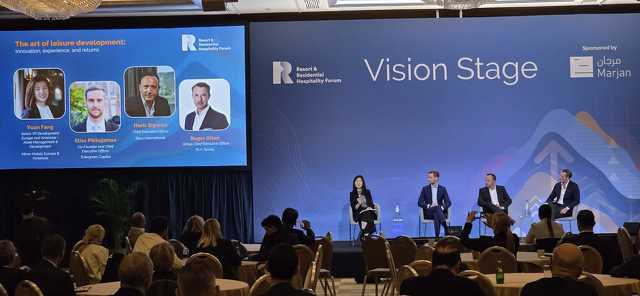
Investors need to consider several questions before deciding on a leisure development, but might lack guidance. A panel of industry leaders recently discussed the best practices to follow and traps to avoid in this field – here’s what they’ve found.
As experience-led demand is reshaping hospitality investment, developers should rethink how leisure projects can deliver both outstanding guest satisfaction and healthy investor performance, industry leaders agreed at the recent Resort & Residential Hospitality Forum 2025 in Athens. Speakers in The Art of Leisure Development panel discussion – moderated by RLA Global’s Group CEO Roger Allen – provided elements of a blueprint developers can follow in balancing the critical aspects of long-term value creation.
Guest experience: many ways to create memories
Guest expectations for authentic experiences continue to increase, pushing hotels to find new and tangible ways of satisfying demand. There is no cookie-cutter solution though when it comes to hotel programming and experiences, the panelists suggested.
“We see an exponential traveler desire to search for unique experiences, strong emotions, adventures and connection to nature,” Yuan Fang, senior VP of development in Europe and the Americas at Minor Hotels said. Their properties aim to offer experiences that generate memories guests can bring back home and share with their friends. She mentioned the example of spending time with rescued elephants, together with a biologist, in a programme offered by their Antara Golden Triangles hotel in Thailand.
Experiences do not need to be “fancy things”, they are often simple moments, like sitting by an open-air fire or ice fishing, said Elias Pikkujämsä, co-founder and CEO of Evergreen Capital, which has projects in Arctic regions, including a 132-hectare development at Lake Inari in Finland. They also work together with the indigenous Sami people on how to engage with their culture in the project. He said experiences can be tied back to hotels or brands, as they are organized by the property and often take place at the hotel site.
Haris Siganos, the founder and CEO of Zeus International Hotels & Resorts, stressed the importance of connectivity between the hotel and its surrounding ecosystems, including nearby villages, as well as interactions with locals. Guests may pick a hotel based on Instagram photos, or its facilities, design and location, but it is important that they return home with nice memories about discussions with a staff member about local culture.
Technology innovations: how AI can work best
Tech solutions, such as AI, are increasingly important to boost operational efficiency and also guest experience at hotels, but they should only complement and not replace human interaction, which is still the most valuable tool in hospitality, the panelists said.
Siganos at Zeus International believes that AI and other tech tools work best as parts of integrated ecosystems, in connection with the human factor, and can be put to work to increase the efficiency of back-office work. This was echoed by Fang at Minor Hotels, who said AI helps with administrative and repetitive work and free up time for hotel teams to focus on enhancing guest experience. Human interaction leads when it comes to creating long-term value, followed by AI and other technologies as supporting elements, Pikkujämsä of Evergreen Capital said.
AI undoubtedly plays an increasingly important role in hospitality: 73% of travelers use AI-based tools globally to plan their trip, Fang said. Minor Hotels also takes advantage of AI to personalize the guest journey, allowing customers to control check-in and check-out or even room selection, for example. She also believes that AI’s role and value compared to human interaction depends on hotel segment, in midscale and upscale hotels guests appreciate the quick answers and easy responses AI can provide.
There is still plenty of room for further use of AI, and personalization in general, in certain hotel segments. Roger Allen highlighted that personalization is widely demanded and offered in the luxury segment, but it dwindles at midmarket and other properties down the chain scale, leading to missed opportunities for operators.
Financial focus: returns and profit centers
Financial performance was another central theme for the panelists, who outlined specific expectations and strategies. Siganos reported that Zeus International targets baseline returns of 6-7% after capital expenditure and financing, with upside potential reaching 10-13%. He said branded residences offer a 24% premium over unbranded projects, and his group aims for 30% annual expansion, adding two to three properties per year.
Over the past decade, Zeus International has achieved approximately 30% annual growth by repositioning non-performing hotels. The strategy focuses on creating destination concepts first, then developing hotels around them, Siganos explained.
For mixed-use resorts, the most profitable and needed facilities are wellness and F&B at Minor Hotels, Fang said. She said wellbeing today includes several additional aspects in addition to traditional wellness – ranging from sleep and food to beauty and longevity. One example of a complex wellbeing concept is a product at Anantara Phuket, which combines traditional medicine with cutting-edge technologies, she said.
Siganos warned that facility planning requires caution, for example, sports facilities and marinas must be carefully designed to avoid disrupting hotel operations. Proper allocation prevents facilities from becoming long-term operational burdens, he said.
Investor strategies: what works, what fails?
The panel offered a series of best practices for successful leisure development. Key recommendations included choosing appropriate brand partnerships, starting with strong location fundamentals, ensuring committed stakeholders, creating ecosystems with locals and staff, defining clear concepts and guest profiles, and considering the entire guest journey from booking to post-visit engagement.
Equally important were the pitfalls to avoid: replicating concepts inappropriately, delaying brand involvement, cutting corners in development, and neglecting local community aspects. These lessons highlight the delicate balance between ambition and execution in hospitality projects.
Roger Allen stressed the importance of guest segmentation, warning against attempts to satisfy all guest types simultaneously. “Developers must understand positioning and target guest profiles to deliver best-in-class experiences,” he advised. Focusing on specific markets prevents hotels from becoming the “jack of all trades and master of none,” he said.
The panelists also agreed that sustainability is a non-negotiable factor in hospitality investment, both for brand equity and for establishing destinations in regions without comparable products. Future-proofing hospitality projects requires genuine commitment to environmental and social responsibility, they said.
Fang identified overall key investor expectations for leisure developments, listing ESG and sustainability as mandatory requirements, operational efficiency and profitability – both top-line and bottom-line – as well as the agility to face economic headwinds, and again, selecting appropriate partners among the priorities.
Outlook: luxury and residences show upside
Looking ahead, the panelists outlined a series of growth opportunities. Fang expects the luxury and branded residences segments to offer further growth potential. She said about 50% of the European and American projects include a branded residence component, and this rate is even higher in luxury segment.
Nature-based luxury travel is gaining momentum, “that’s where we see the data and travel patterns go,” according to Pikkujämsä. Siganos expects new destinations to emerge, partially in underdeveloped locations, and mixed-use projects to gain more ground. RLA Global’s Allen predicts the return of the all-inclusive model, particularly in luxury, and further growth in standalone branded residences.